
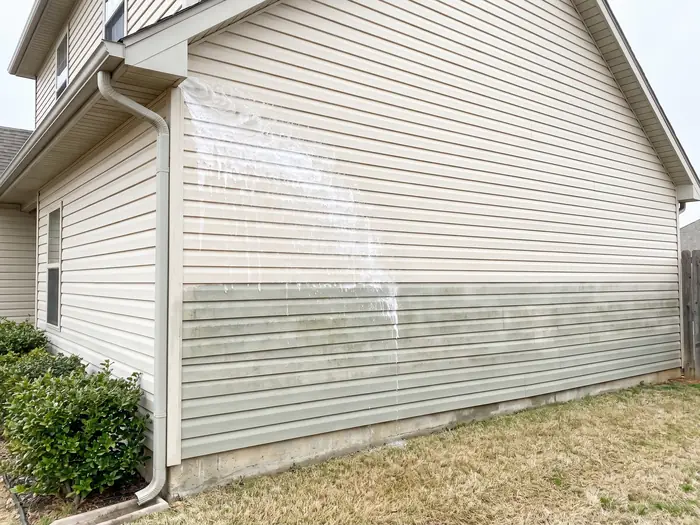
House siding
Vinyl, stucco, painted wood, fiber cement and hardboard. High pressure drives water up behind lap siding and into the wall cavity, which is how you end up with a mold problem instead of a clean house. Soft washing doesn't do that.
Home/Services
Every surface on a property wants a different approach. Here's the plain version of what we do to each one, so you know what you're buying before we show up.
High pressure
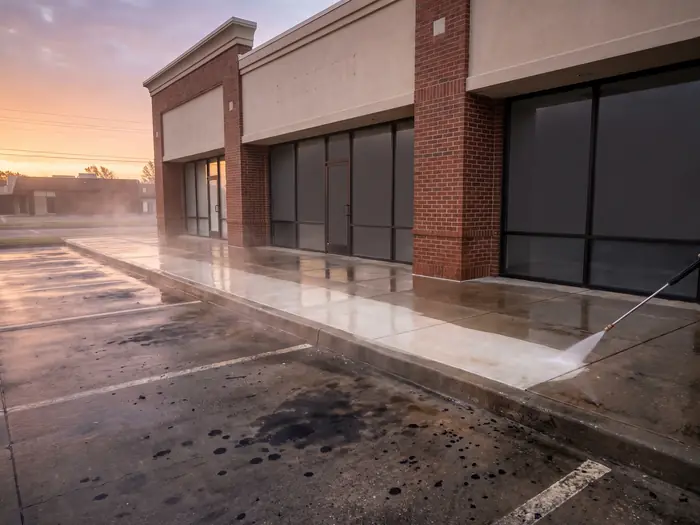
Concrete is the one surface that genuinely wants pressure. We run a rotating surface cleaner rather than a bare wand, which is what keeps the finish even. Wand work leaves visible arcs and stripes that never fully disappear.
Typical concrete work includes:
Oil and grease need a degreaser and dwell time before the pressure does anything useful. That's quoted as an add-on so you're not paying for it when you don't need it.
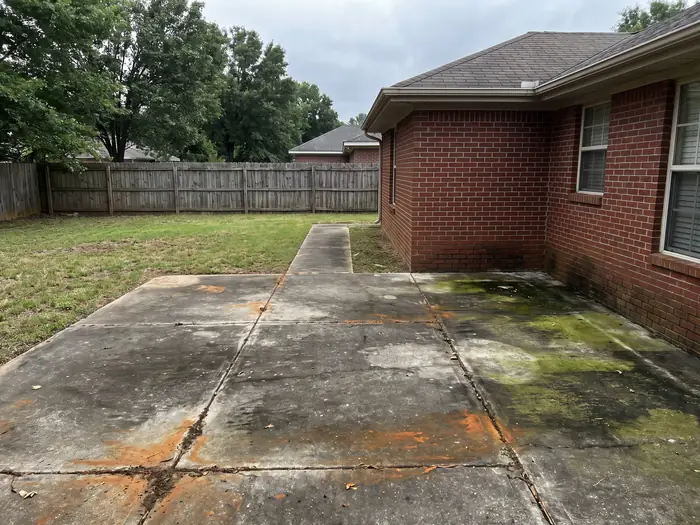
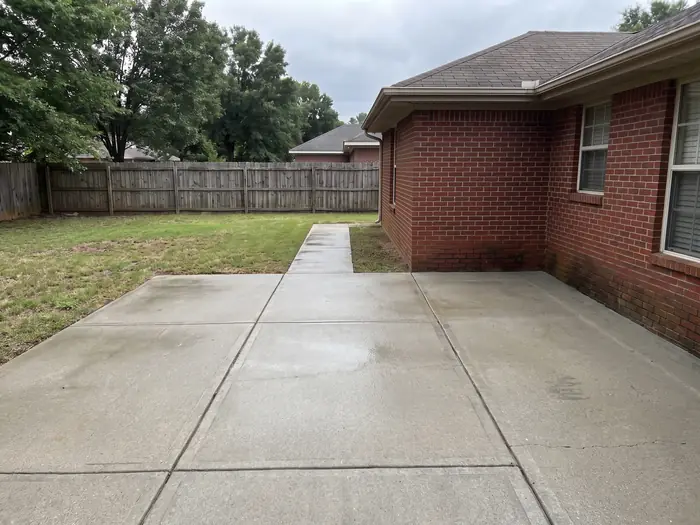
Shaded back patios green up faster than anything else on a property. This one is the same slab, one pass apart.
Low pressure — soft wash
Soft washing swaps pressure for a cleaning solution. It's applied at roughly garden-hose force, left to do its work, then rinsed. Slower than blasting, and the only method that's safe on these surfaces.
Vinyl, stucco, painted wood, fiber cement and hardboard. High pressure drives water up behind lap siding and into the wall cavity, which is how you end up with a mold problem instead of a clean house. Soft washing doesn't do that.
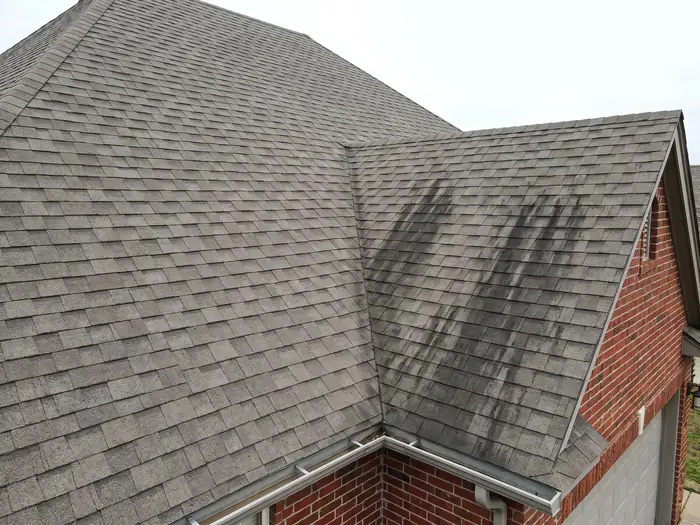
The black streaking on Oklahoma roofs is Gloeocapsa magma, an algae that feeds on limestone filler in the shingles. It rinses off with a soft wash. A pressure washer would strip the granules and take years off the roof.
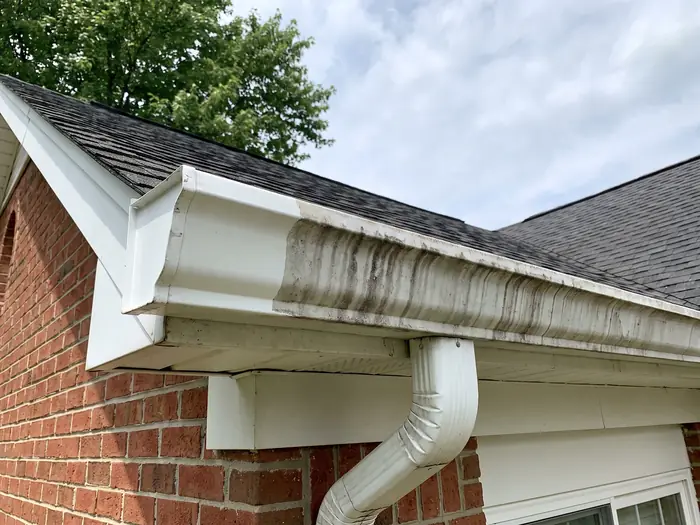
Two separate jobs, and you can book either. Outside: removing the vertical "tiger stripes" that don't come off with a normal rinse. Inside: clearing out what's collected so the water actually goes where it should.
Medium pressure
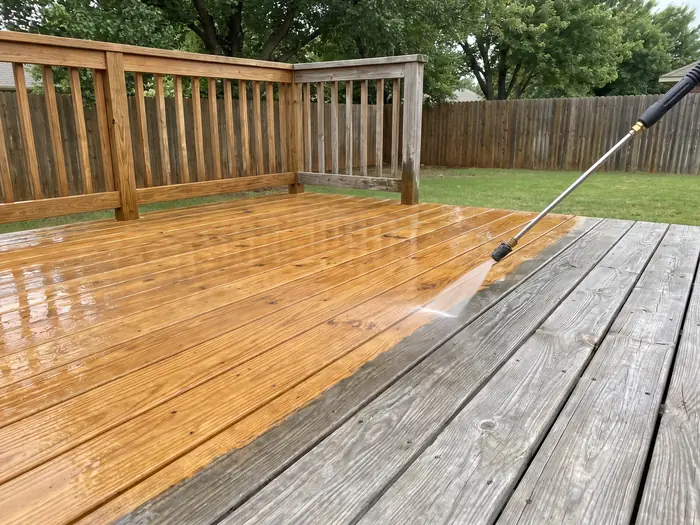
Wood sits between concrete and siding. Too little and the grey stays put; too much and you tear the soft grain out from between the harder rings, leaving a fuzzy surface that won't take stain evenly.
We work along the grain at a pressure matched to the species and how weathered it is, then rinse the whole run so it dries to one consistent tone. If you're planning to re-stain, wash first and give it a few dry days.
The brick itself is tough. The mortar between it isn't, especially on older houses where it's soft lime rather than modern Portland mix. Point a 3,000 PSI wand at an old joint and you'll wash it out.
We clean masonry at a pressure the joints can take, and treat organic growth chemically rather than trying to blast it off. That covers retaining walls, chimneys, column bases and stone veneer.
For businesses
A grimy entryway is the first thing a customer reads about a business, and it's usually the cheapest thing on the property to fix. We schedule commercial work before opening or after closing so nothing interrupts your day.
Quoted alongside whatever the main job is, so you only pay for what the property actually needs.
Pressure washing in Oklahoma City is priced by the job, not by the hour, and the price comes from four things: how much surface there is, what the surface is, how long it's been since the last wash, and how easy it is to reach.
Square footage sets the baseline — a three-car driveway is simply more concrete than a one-car pad. Surface type sets the method: concrete takes fast, high-pressure surface-cleaner work, while roofs and siding need slower low-pressure soft washing with dwell time, so the same area can price differently on different materials.
Condition is the multiplier people don't expect. Concrete washed every year cleans quickly; a slab carrying five years of algae, oil or red clay needs pre-treatment and extra passes. And access matters at the edges — a second story, a locked side yard, or no working outdoor spigot all change how long the job takes.
Add-ons like oil and grease removal, rust treatment or gutter interiors are quoted separately, so you only pay for them when the property needs them.
What we don't do is quote sight-unseen numbers that change on arrival. We look at the property, give you a firm price for the work described, and that's the number on the invoice. The estimate is free, and if a surface doesn't need washing yet, we'll tell you that instead of selling you on it.
Describe what you're looking at and we'll tell you. The estimate is free either way.