
Home/Services/Deck & Fence Washing
Deck and fence washing in the Oklahoma City metro
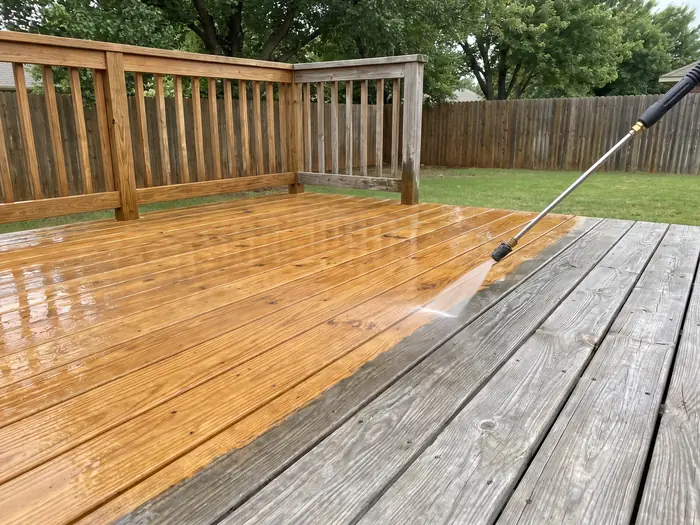
The grey on weathered wood is a surface layer, not the wood itself. We wash it off at a pressure the boards can take: enough to lift the weathering and mildew, never enough to tear the grain. The color underneath comes back.
What we clean
- Deck boards & railings
- Privacy & picket fencing
- Pergolas & arbors
- Composite decking
- Stairs & landings
- Prep before staining
Planning to stain? Wash first, then let the wood dry for a few warm days. Stain over grey fibers and mildew is the stain that peels next summer.
How we do it
Wood sits between concrete and siding on the pressure scale, and getting that wrong is visible immediately. Too little force and the grey stays put. Too much and the soft grain tears out from between the harder growth rings, leaving a fuzzed surface that reads as damage and takes stain unevenly.
So we work along the grain, at a pressure matched to the species and how weathered it is. Cedar takes less than pressure-treated pine, and a twenty-year-old fence takes less than a five-year-old one. Mildew gets treated chemically first so the pressure has less work to do.
Each run gets rinsed as a whole so it dries to one even tone instead of drying in patches where the wash stopped and started.
Same boards, same afternoon
Weathered grey on one side, freshly washed on the other. The honey-brown isn't new lumber — it's what was under the grey the whole time.
What it costs
Deck and fence work is priced by the job: square or linear footage, height, one side or both, the species, and how long it's been weathering. We give you a firm price after seeing the property, and that's the number you pay.
Deck and fence questions, answered straight
Will pressure washing damage my deck?
Pressure washing can damage a deck if it's done at concrete pressure. Wood is a mix of hard and soft grain, and too much force tears the soft grain out, leaving a fuzzy surface that won't take stain evenly. We wash along the grain at a pressure matched to the species and its condition — enough to lift the grey, not enough to cut the wood.
My fence has gone grey. Is the wood ruined?
Grey wood is almost never ruined. The grey is a thin layer of UV-degraded surface fibers plus mildew, not rot. Washing lifts it off and exposes the sound wood underneath, which is usually still the original color. Actual rot feels soft and spongy. If we find any, we point it out rather than washing over it.
How long after washing can I stain or seal?
Give the wood a few dry, warm days after the wash. Stain applied to damp wood doesn't bond and peels early. Washing first matters just as much: stain over grey fibers and mildew is stain that fails in a year.
Do you clean composite decking too?
We do. Composite doesn't grey like wood but it does grow mildew, especially in shade, and it wants even less pressure than cedar. Most composite manufacturers cap allowable pressure well below what wood tolerates. It gets a gentle wash with a cleaner doing most of the work.
How much does fence washing cost?
Fence washing is priced by the job: mainly linear footage, height, one side or both, and how weathered the wood is. A backyard privacy fence and a full corner-lot perimeter are very different jobs. We give you a firm price after seeing it, and that's the number you pay.
Bring the color back to your wood
Call or text 405-240-7848, or send a few details and a photo of the deck or fence.